Saturday, December 26, 2009

#7 - Fake News


It was the decade when...

The real news seemed fake and the fake news seemed real.


Let's face it, a lot of shit went down this decade. Compared to the temperate seas of the 90's, a decade so devoid of dramatic news that years were spent obsessing over a presidential hummer, the aughts were a roiling tempest of global turbulence, financial meltdowns, ecological disasters, foreign wars and game-changing historical events which, when seen in totality, mark this as the most significant decade for news since the 1960's and maybe earlier.

The news itself was news this decade. With the method of information dissemination being reinvented daily by the Internet, traditional news sources found themselves scrambling to keep up and stay profitable. On television, all three of the long-standing grandfatherly network news anchors either retired or expired, and with their passing so too the primacy of "the Nightly News" as the central authoritative televised presentation of the days events. Even Walter Cronkite finally gave up the ghost. No television program would ever be able to fill the role that the "Nightly News" used to play, not in the fragmented and blog-filled world that we suddenly found ourselves living in. That being said, there was one news program in the aughts that reported the news thoroughly and accurately while at the same ladling the comic absurdity of the modern world over every story it reported. I am of course talking about The Daily Show with Jon Stewart, without question the decades most important news program.

Ushering in a golden age of satire The Daily Show with Jon Stewart reasserted irony as the primary weapon of truth-telling in civil society. The show was the news media's sarcastic conscience in an era of unabashedly biased cable networks, barking media "pundits," political "spin-rooms", and shrinking financial resources for bread and butter field reporting. The aughts were an era where sycophantic "reporters" with dubious credentials infiltrated the White House press corps, lobbing softball questions to GW in times of great national crisis. An era when the 24 hours news cycle amplified every political skirmish into a hysterical crisis only to be discarded and forgotten by the next day. An era in which the talk show host with the most stringent views or most outrageous performance skills garnered the highest ratings, truth and thoughtfulness be damned. It was in this context that The Daily Show, though far from unbiased, acquired a carapace of authority and integrity shared by no other television program. To those who counted on a fair analysis of the news The Daily Show became a nightly ritual for many Americans, replacing both late night talk and traditional evening news. Host Jon Stewart went from being a successful stand-up comic and sporadically employed film actor to the most trusted man in America. Eminently astute and endlessly hilarious, Stewart combined old-fashioned borscht belt humor and the hyper-intellectual comedy of Ivy League publications like the Harvard Lampoon, with a dose of Tim Russert's inquisitional rigor thrown in for good measure. Unlike the self-congratulatory echo-chambers of 24-hour news networks, The Daily Show actively courted intelligent debate of a kind not seen on television since William F. Buckley gave us his parting switchblade smirk on Firing Line.

The shows most important function was its role as a media watchdog, ruthlessly exposing the lunacy and hypocrisy of the "legitimate" cable news channels, which, in the show's meta-analysis of the field, come across as inane and opportunistic loci of blathering idiots and any-for-a-rating gambits. How else to explain Glenn Beck or CNN's Star Wars hologram? By dismantling the edifice of legitimacy that the "real news" claimed a monopoly on, the void left behind was to be filled by a different kind of program, one with no obligation to seriousness but which nonetheless was executed with the utmost of integrity. The Daily Show's ridicule of mainstream news paved the way for its own meteoric rise to success. When Jon Stewart appeared on CNN's long runing debate program Crossfire the comic all but torpedoed his hosts, turning his appearance into nothing less than a full-blown confrontation, accusing his hosts of "hurting America." The show was canceled a few months later, all but coronating Stewart as America's voice of reason.

The Daily Show grew so popular it became a miniature star factor with many of the series' correspondents moving on to widespread Hollywood success. Steve Carrell joined Judd Apatow's cadre, transforming himself into a major film star. He then conquered the small screen yet again as the read role in TV's hit sitcom The Office. Ed Helm's eventually joined Carrell on The Office and later landed big screen success in 2009's biggest comedy smash, The Hangover. Rob Courdroy too has cultivated a modest film career after his tenure on The Daily Show.

But it was former correspondent Stephen Colbert who turned his faux-newsman persona into a one-man cult of personality on The Daily Show's remarkable spin-off The Colbert Report. A lampoon of blowhard talk show hosts of a sort popular on Fox News, The Colbert Report is even purer satire than its source. Never breaking from his assumed egomaniacal pomposity and party-line conservatism, Stephen Colbert (the character, not the actor of the same name) is a textbook lesson in satirical construction. From the beginning Colbert had his finger on the pulse of America. Introducing the word "truthiness" into the American lexicon during his first episode, the word could arguably be the most vital addition to the American vocabulary in years. When Colbert was plucked to bring his act to the Annual Press Correspondent's Dinner in 2006 his set left the room in a dazed silence, the routine being a sustained and penetrating critique of the Bush Administration's policies and the press' coverage thereof. After bombing in person, when the footage hit the internet Colbert's speech immediately turned into a sensation, eventually running a victory lap as the most watched video on iTunes. It still remains one of the most overtly confrontational and politically brave moments by a member of the press during the Bush administration.

With The Daily Show and The Colbert Report (as well as their cousin in print, the sublimely hilarious weekly news periodical The Onion) satire and humor acted as the spoonful of sugar to help the medicine of go down. As real news veered ever closer to the precipice of absurdity, more and more did the silly and comic approximate the actual texture of reality, even when the truth was anything but funny. With an administration and congress more closely aligned with the ideological perspective of the Daily Show's creative team now in power, it remains to be seen if the show will be able to maintain its critical satiric edge. But whatever happens, without the fake news of the past ten years the real news would have simply been unbearable.

You AUGHT to remember...


Thursday, December 24, 2009

# 8 - Hooking-up


It was the decade when...

No one had "sex" anymore.

Note: College and Grad students, feel free to submit this essay as your own for a course in "Contemporary Neologisms and Hegelian Philosophy."

The Hookup: A Dialectic Analysis

In the aughts, one expression has surged in popularity, especially among the young. One expression embodied, in itself, a shift in the culture's sexual mores. This shift, I hope to prove, could not have occurred without the expression, the language facilitating the needed symbolic restructuring that social pressures demanded. Eventually, so common was the expression's use that it itself began to alter behavioral patterns, as opposed to merely accommodating them.

I am, of course, talking about "hooking-up," the aughts' catch-all term for any casual sexual interaction. By deconstructing the subtle ways in which the word functions, we can analyze both how behavior dictates language and, reciprocally, how language dictates behavior. A dialectic analysis allows us to trace the evolution of the expression and its widespread integration in society.

Employing the dialectic concepts of thesis, anti-thesis and synthesis we can trace how "hooking-up" became such a dominant phrase in our collective vocabulary. In a traditional dialectic, within each thesis is a contradiction which leads to the antithesis -- which then brings about synthesis.

What was the thesis here? As the 21st century approached, a generation was coming of age that had never lived through the sexual revolution of the sixties or the gender politics of the seventies. Women were equals to men prima facie; they no longer had greater pressure to get married than men and were actively discouraged from having children at too young an age. Concurrently, sexual interactions outside of marriage were by now the norm, safe-sex education and the pill rendering the activity consequence-free for those responsible enough to take precautions. The result was a society where casual sex, of one sort or another, was becoming more and more prominent.

And here we arrive at the contradiction. Even though social pressures were creating a need for loose and easily-disposable romantic detachments, the lexicon of terms to describe this variety of sexual behavior was wanting. Options of expression were limited and inadequate. There was a severity to saying that you "had sex." The disclosure was too invasive, too clear, too forward. It was even worse to "make love" when obviously you were doing no such thing. Expressions with a more casual feel were tainted by a misogynistic cant: "Get laid," "scored," "hit a home run," "got some," "nailed her" (which is almost impossible to imagine or make sense of with the opposite pronoun, continuing a tradition of male-centric slang descriptions of sex)," are but a few examples. They all share a view of sex as conquest, a vantage point almost always masculine in perspective. Suddenly these terms began to sound as antiquated as "free love." There simply was no word to express the new sexual politics of the 21st century.

What kind of language would be required to accommodate these new social pressures? It would have to be gender neutral, for one; women as much as men were engaging in this casual sexual behavior, and it sometimes involved two women or two men. It would have to deflate the importance of sex, making the activity as mundane and routine as walking the dog or getting a latte. It would need to maintain a certain level of discretion, allowing people to discuss the topic without admitting much in the way of specifics. And finally, it should allude to easy detachment. "Hooking-up" was the perfect candidate.

Already an expression in common - though different - usage before the aughts, to "hook-up" with someone meant little more than to meet them in person. It was inevitable in retrospect that the word would get re-appropriated to imply, now almost exclusively, some sort of sexual interaction. This re-appropriation was the anti-thesis to the contradiction created by a vocabulary and social climate that were deeply mismatched. "Hooking-up" could mean anything from a stolen smooch at a party to full-blown intercourse. In either case, one was not inclined to press the point further and inquire just what a person meant when they said they had "hooked-up" with someone. "Hooking-up" was a catch-all; a phrase allowing people to both confess their intimate behavior to others and simultaneously reveal almost nothing. The verb "to hook" was the perfect symbolic image for interpersonal connection in the aughts. Hooking implies easy unhooking. Other verbs in the vicinity carry with them a deeper sense of permanence: to link, to join, to latch, to meld. Hooking, with its intimations of tenous permanence, was the ideal metaphor for sex in the aughts.

As the phrase caught on we reached the synthesis point in the dialectic. From first accommodating new social realities, the phrase began to proactively create them. "Hooking-up," as an expression more than an activity, normalized casual sex to such a degree that inhibitions against such behavior were slackened to the point of non-existence. "Hooking-up" became an expectation, a fully integrated aspect of modern life for the young. Language, not merely expressing our ideas, actively sets the coordinates of our social reality, creating culture, not just defining it. There needs to be a stabilization between external behaviors and internal representations of such behaviors, these representations being embodied by words and expressions. The relationship is a two way street. The important thing is that they not get too misaligned; such tensions, as seen in the early aughts, can lead to dramatic change, both within a individual and society as a whole.

Does "Hooking-up" have a half-life in our collective consciousness, or is the notion here to stay? I suspect the former. The synthesis of the dialectic that brought us to this point may itself be a new thesis with its own internal contradictions. The cagey ambiguity at the center of the expression - its failure to express much at all - implies a certain retrograde prudishness that we still hold with us. There is something dishonest about "hooking-up," something delusional. "Hooking-up" takes away the sex from sex, neutralizing its awesome power. We still feel anxiety about the broken down gender roles and sexual negotiations that the modern world foists upon us, unable as we are to integrate a truly coherent sexual ethos into a world where procreation can be accomplished in a lab and men and women share social equality (in theory if not practice). "Hooking-up" may not, in the final analysis, resolve this neurotic predicament. It's a temporary solution to a long-term problem: the human animal.

You AUGHT to remember...

Wednesday, December 23, 2009

#9 - Reality TV


It was the decade when...

Reality got really fake.

Growing like a cancer throughout the Aughts, Reality TV began as a benign fad that quickly metastasized into a full-blown fixture of television programming, threatening the health of the entire medium. Reality TV was junk food: cheaply made, bad for your health, greasy, deeply addictive and prone to cause indigestion. Never had the term boob tube seemed so apropos. As the appetite of the audience grew more and more insatiable, the competition to create new content devolved fast into a race to the bottom, the shows growing ever more outlandish and sensationalistic. With nearly as many channels as there were viewers to watch them, the need for cheap and salacious material to stand apart from the fray became all consuming.

And who were the stars of Reality TV? From the evidence on display in show after show, the only casting criterion was that you be as unreal as possible. A unappetizing lot of stripper skanks, desperate nobodies, muscular meatheads, nerds with the social skills of small rodents, and celebrities climbing their way back onto the D-list, the stars of reality television were Hollywood's shortbus of non-talent would-bes and has-beens. Though they all ostensibly have passed psychological exams, watching the programs one would be hard pressed not to suspect that a few unscrupulous doctors were slipped a bribe or two; how else to explain the Charenton Asylum level of insanity on display?

As the decade wore on the format consolidated into recognizable mini-genres, each with their own cliches and quirks. A quick run-down of the two most popular, and abysmal, types:

Celebrity Verite
Beginning with the surprise success of The Osbournes, Celebrity Verite was one of reality television's most durable genres. The idea: take a quirky, off-beat celebrity and document their daily life, it's bound to be entertaining. The Osbournes worked because, despite the obvious eccentricities of its leading man, the show captured an honest dynamic of family life. As with all reality TV trends, when series came and went the spark of originality soon disappeared, replaced instead by ridiculously contrived scenarios and spontaneity-free dialogue. Whatever gonzo verisimilitude made The Osbournes a surprising charmer is totally absent from more recent Celebrity Verite exercises. The unwatchable Keeping Up With Kardashians is proof enough of that. Other prominent examples: The Anna Nicole Show (Anna Nicole Smith), Newlyweds: Nick and Jessica (Lachey and Simpson), The Simple Life (Paris Hilton and Nicole Ritchie), Hey Paula! (Ms. Abdul), Hammertime (M.C. Hammer), Hogan Knows Best (Hulk Hogan), The Girls Next Door (Hugh Hefner), The Two Coreys (Haim and Feldman), Tori and Dean: Home Sweet Hollywood (Tori Spelling), My Life on the D-List (Kathy Griffin) and Being Bobby Brown (Bobby Brown and Whitney Houston).

Reality Romance
Reality dating (quite opposed to dating in reality) in the Aughts began with a sour note, the now legendary Who Wants To Marry a Millionaire, a one-night special aired on Fox in 2000 in which a terrified blonde named Darva Conger found herself betrothed to a "multi-millionaire" with a lounge singers name, Mr. Rick Rockwell. The marriage, it need be noted, did not last. It wasn't even consummated. From this blatant glorification of gold-digging and misogyny, the only place to go was up. And yet, descent was achieved. With the bland Bachelor and Bachelorette as the template, dating shows became the most formulaic of all Reality TV. The Set-up was always the same: A central "bachelor" is looking for love. A harem of contenders longingly pines for their would-be suitor. A weekly event or outing or contest helps determine that weeks elimination, chosen, ostensibly, by the bachelor him/her self. At the end of the series our lead selects his/her soul-mate; riding off into the sunset together they live happily ever after. (Or at least until they receive residuals.) From show to show, the structure is practically set in stone.

The difference between one show from the next is the novel band of contenders that the producers select and whatever manipulative twist can be thrown in at the last minute to spice up the otherwise tired formula. Same-Sex romance was explored on Boy Meets Boy (gay bachleor, with both gay and - unbeknownst to the lead - straight boys vying for his affections) and the hastily canceled Playing It Straight (the exact opposite of Boy Meets Boy, with a bachelorette seeking a male companion). Those of ample appetites got their moment in the reality sun with More To Love, the dating show for people with waistlines as big as their hearts. Various has-been celebrities got into the act, looking for love as the star of their own dating reality show. Tilla Tequila swung both ways on A Shot at Love, while Brett Michaels made it his goal to nail each of the contestants on the ludicrously skanky "Rock Of Love." Rap star and human timepiece Flava Flav scored big ratings with his show, Flavor of Love. It lasted three seasons despite its star finding true love at the end of each iteration. Curious. Failed Flavor of Love contestant "New York" proved so popular that the outlandish loudmouth got two seasons of her own dating extravaganza, I Love New York.

Fooling no one, the pretense of romance on any of these programs is about as authentic as Tila Tequila's breasts. That's not the appeal. We just like to watch the carnival. The freak-show is alive and in full force. My favorite of the genre? Joe Millionaire, the 2003 Fox dating show in which a gaggle of airheads think they are being courted by a dashing young millionaire only to be told in the finale that he is, in fact, a construction worker. The show was nasty, ridiculous and impossible to stop watching.

The structure of reality dating has been copied in other reality shows from America's Next Top Model to Scream Queens to the dating-in-all-but-name Brody Jenner vehicle Bromance. The format itself has gotten so old it almost makes one pine for the days of Love Connection.

Of course there is so much more to Reality TV! I didn't even get to talk about the surfeit of dance-focused shows like So You Think You Can Dance or Dancing With The Stars. And what about competition programs like the original reality phenom Survivor or Emmy darling The Amazing Race! Wife Swap gave us the "God warrior" as well as Richard Heene, the man who would go on to give us the hoax of the decade - the balloon boy. And RuPaul's Drag Race! I didn't even get to talk about RuPaul's Drag Race! Our cups runneth over...

And lest anyone be concerned about my viewing habits after reading this, fear not; I don't actually watch this crap. I learn everything I needed to know from The Soup!

You AUGHT to Remember...

Tuesday, December 22, 2009

#10 - Harry Potter and the Enchanted Bag of Money


It was the decade when...

Boarding school never looked so good.


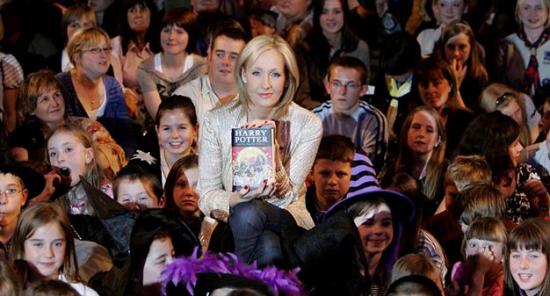
Harry Potter was the Aughts' biggest franchise, a series of books (and later movies) that cast a spell not merely on children but the whole of civil society. To call them "childrens books" is akin to calling the Atlantic Ocean a really big lake. Grown men and women showed no qualms when reading the books in public, often on on park benches and on subway trains, all but advertising their devotion to the series. J.K. Rowling could do no wrong. It wasn't kosher amongst even the most pretentious of the intelligentsia to sneer at the books the way the same crowd did (and should have) for the two other publishing bombshells of the decade, The Da Vinci Code and Twilight. Take that same superior attitude toward the Potter books and you were likely to lose friends fast. Rowling's creation was critic proof, despite whatever Harold Bloom says.

By the time the door-stopper of a final Harry Potter book came out, the release was greeted with the kind of promotional roll-out usually reserved for Michael Bay films or Olympic ceremonies. Deep queues of people dressed as Hufflepuffs and Slytherins waited for hours outside bookstores to grab their midnight copy of Harry Potter and The Deathly Hallows, which, after their persistence and patience, they proceeded to read until completion in the wee small hours of the morning. No book can, or maybe ever will, receive such a mardi-gras of celebration upon release. When the smoke had cleared, the series had sold over 400 Million copies and had been translated into over 67 languages. Rowling, who had once subsisted on the government's dole, heads into the next decade a billionaire.

The trick of Harry Potter was Rowling's employment of a traditional coming-of-age narrative filtered through enchanted cheesecloth, creating a "magic" world that was, in fact, analogous to our own. Hogwarts was in most important respects like any boarding school, except at Hogwarts one could converse with the portraiture or learn how to brew aphrodisiacs in chemistry class. Though the muggle (that's Potterian for non-wizard) world seemed anemic and bland next to the Hogwarts fairly-tale, look deeper and its clear that each was but a reflection of the other. All the magic in Harry Potter can be read as a parody of more mundane realities. Even Quidditch, the most popular sport no one has ever played, is little more than an elaborate game of soccer (excuse me, football) taken into the third dimension.

Rowling's myth-making was not the genesis-like creation of an entirely new imaginative eco-system, as was the case with fantasy classics by Tolkien and (dare, I say) George Lucas. Rather than inventing her menagerie of enchanted fauna from thin air, Rowling's potpourri of character types are a grand buffet of mythic creatures and traditional Christian and pagan bogeymen: Wizards and witches, dragons and trolls, giants and werewolves. Rowling was churning through the entire back-catalog of childhood fantasy to make her epic. But, underneath the spells and sorcery were adolescent realities: schoolwork, puberty, nascent sexuality, and the tenuousness of innocence and youth.

The Potter phenomenon did not begin in the Aughts (the first book was published in 1997), but it was the release of the first Harry Potter film, Harry Potter and the Sorcerer's Stone, in 2001, that kicked off Potter's march toward total cultural dominance. The following series of films based on the books have too been wildly successful in their medium. How successful? Well, all six of the films made so far are among the top 25-highest grossing movies of all time. That successful. And, for the most part, they have achieved artistic as well as commercial success. Though the first two films reek of a heavy-handed and antiseptic Hollywood aesthetic (the blame mainly falling on the director Chris Columbus' less-than-subtle approach), as the series pressed onwards Warner Bros. hired adventuresome and sophisticated directors, supplying greater depth and melancholy to the story. Alfonso Cuaron, Mike Newell, and David Yates have all sat at the director's chair, bringing their dinstictive styles to the property.

For the adults in the room the real joy comes from watching the entire payroll of the Royal Shakespeare Company gnaw at the expensive, stony scenery the way only a British thespian can. Has Alan Rickman, an actor with 16 variations of a sneer, ever been put to better use than in the role of Severus Snape? Could Ralph Fiennes be any more ominous and serpent-like as the Dark Lord Voldemort? And how genius is Maggie Smith as McGonagall, pursuing her lips with the hilariously submerged indignation and hysteria that only the two time Academy Award winner can summon? Or consider Emma Thompson as a batty "divination" instructor? Or Kenneth Branagh as...well, the list goes on. The brilliant cast is the series' secret weapon: not only are they all impeccable in their roles, they're English as Fish & Chips. An cast chock full of Sirs and Dames supplies a national authenticity (the Potter stories, for all their universal appeal, are as British as Brideshead Revisited or Coleman's Mustard) to a production as Hollywood generated and financed as a Transformers film.

When the final installment (halved into two films, lest the cow be anything but totally dry upon final milking) hits multiplexes starting next year, it will be the final curtain to Potters hegemonic dominance on childrens fantasy entertainment. Rowling, the most profitable writer in history, now finds herself with an impossible act to follow. Maybe she'll just spend the rest of her life dropping scandalous morsels of gossip about the characters from her books. Sure, we now know Dumbledore's a homo, but maybe Ms. McGonagall was actually a 60's radical. Or perhaps Ron grows up to become an S&M fetishist. The possibilities are endless. Meanwhile, the books will remain staples of a child's literary diet, easily on a mantle next to the best of Lewis Carrol or C.S. Lewis. Personally, I would like Rowling to keep telling Harry's story. He grew up with us, shouldn't he grow old with us too? Who wouldn't want to read Harry Potter and the Irreversible Herpes Spell? Or Harry Potter and the Cursed Marriage of Doom? And finally, we can't forget Harry Potter and Potter and the Mage's Magic Adult Diaper.

You AUGHT to remember...

Monday, December 21, 2009

#11 - Tweens


It was the decade when...

Grown men and women were forced to use the word "tween."


Pop quiz. Before you were a teenager you were a....what? Well, for almost all of human history you were, simply, a child. But, one day the early-mid aughts, some corporate douche (actual it was probably a whole boardroom full of doucheitude) realized that he could drum up a whole consumer base by inventing a new demographic to exploit. Enter the "Tween." As in, "inbetween." As in, "inbetween childhood and high school." Clever? I thought not. Those oh-so-magical years from 8-12, notoriously the worst of all youth (especially the later few, with the inchoate stirrings of puberty in the background), are now the focus of our national attention and the drain funneling away our excess cash. A demographic defined almost entirely by what it consumes, a tween cannot be extracted from their taste in music, or clothing brand loyalty or movie going habits. With almost all other media splintering down into more and more refined niches, the Tweens represent the last remaining monolithic mass market to advertise to. No group is more susceptible to slavish groupthink than a pre-teen, the age when solidarity with and acceptance by one's peers is paramount to ones own sense of identity. Sell to one, sell to all. You are what they buy. And they bought a lot. Tweens, funded by an apparently endless stream of cash from their dazed and clueless parents, shopped with the abandon and mouth-foaming need that only a child could summon guiltlessly, when cost is nothing and obtainment is all. I don't think there were a lot of piggybanks cracked open, it was more like an ATM.

A massive, synaptic-ally interconnected, multi-platform, synergistically marketed network of TV shows, pop bands, movie-musicals, fantasy-novels, clothing brands, and video games - to those in the matrix Tweendom is all. It's celebrities are just the biggest things ever! The music's like, the most fun in the world. Duh! To those unplugged, Tween culture is a hermetically sealed media-dome, inaccessible to those outside yet totally transparent; the tweens themselves were a kind of body-snatched alien race living amongst us. The circular totality of Tween culture is its most amazing feature. Tweens were a self-contained subculture that metastasized into the decade's most game-changing (and profitable) pop-culture phenomenon.

Acting as a kind of central ventricular pump for all things Tween, the Disney Channel hatched more bankable stars this decade than anything other media incubator. A locus of pre-sexual romantic angst, blandly cheerful gonad-free pop, pixie-stick hyper situation comedies, and white-strip-print-ad-ready cherub superstars, the Disney Channel was ground zero for the pre-teen set in the Aughts. From here we can sketch our new Raphael-ian tableau. (The school of Athens? The playground of Tween!) To do so, I have to channel my inner 11-year-old-girl, so, here we go...

Oh My God! So like you have to talk about Zac first, cause he's like hottest boy evah! Seriously though, super serious now, he has really proved himself a worthy, like, mega-star since his debut in HSM. He has so pushed his mad skillz as an actor! Like, for example, he really stretched himself in Hairspray cause he went from playing a singing and dancing hunky high school student to like, a singing and dancing hunky high school student in like the 20's or 60's or, you know, ancient history. I totally bought it! But speaking of HSM..VANESSA! VANESSA HUDGENS! She is like, so beautiful and so talented and it's so not fair! And she gets to date Troy Bolton in HSM and then really date Zac in real life. Again...not fair!! Ok, yeah, she sexted. Like, so what? LOL! I totally love her. But not as much as I love JOE JONAS! He is the middle one in the Jonas Brothers and, OK, like I love them all, I do, I love all the Jonas Brothers, but Joe...is totally the one. Just something about him is so dreamy. And you know he'll be totally a gentleman cause he always wears his purity ring. And of course, I can always listen to his music. Oh, and if you're gonna talk about awesome music you can't not talk about Miley. Miley Cyrus OMG! Only the most awesome biggest most amazing actress/singer/songwriter/dancer/producer ever!! The star of Hannah Montana, the best show on TV! Miley is like, everyones hero. I can't believe that you hadn't heard of her, she's like the most famous person on the planet, duh! Ok, gotta run, my Mom got tickets to the matinee of Wicked; I've seen it, like 10 times. I'm totally Galinda! Yeah..HSM, Jonas, Hannah Montana. That's all you need to know. There is like, totally so much more but I'm gotta go. CYA!

You AUGHT to remember...

#12 - The Metrosexual


It was the decade when...

Put-together straight men threw off everyone's gaydar.


I Am the Very Model of a Modern Metrosexual

I am the very model of a modern metrosexual
I have good taste in matters both specific and quite general.
I know that when a gent is getting ready to go out at night,
It's needed for his self-esteem that shoes and belt should match just right.

I'm very well acquainted too with fashions that are high couture,
From Prada shirts to Fendi belts to Marc Jacobs' entire oeuvre.
And 'cause my wardrobe closet overflows with clothes that I enjoy,
Now other members of my sex are calling me a girly boy!

[Now other members of his sex are calling him a girly boy!
Now other members of his sex are calling him a girly boy!
Now other members of his sex are calling him a girly boy!]

I'm very good at picking out real diamonds from Zirconia.
My ear for music, delicate as songs of a Euphonia.
In short in matters of good taste, specific and quite general,
I am the very model of a modern metrosexual.

[In short in matters of good taste, specific and quite general,
He is the very model of a modern metrosexual.
]

And in the morning I wake up and head directly to the loo.
Before I leave I have about an hour of grooming to get through.
I brush my teeth, I jeuj my hair, I wax and I exfoliate.
I look so hot that I'm aroused; I drop my pants and masturbate.

And at the club so late at night, the girls they swoon and follow me.
The work paid off! I look so good, I've nabbed a pussy colony.
But when I try to make a pass, it doesn't matter what I say.
It seems that they just can't believe yours truly isn't really gay.

[It seems the girls just can't believe his truly isn't really gay.
It seems the girls just can't believe his truly isn't really gay.
It seems the girls just can't believe his truly isn't really gay.]

The grooming of your body is important if your tres hirsute,
A manscaped torso is a must to look good in your birthday suit.
In short in matters of good taste, specific and quite general,
I am the very model of a modern metrosexual.


[In short in matters of good taste, specific and quite general,
He is the very model of a modern metrosexual.
]

Why most men choose to act and talk as if they were neanderthals,
Is but a question which I know cannot be solved in schoolyard walls.
A man can know the rules of sport and pledges of fraternity,

But get a manicure and some would call it an absurdity!


Though I don't mind that people think that I am gay when they see me,
I know that it's a compliment. I know my sexuality.
Try "acting straight?" Well, I don't know, I guess I've never really tried.
But I'm one man, I'm proud to say, with no need to become queer-eyed.

[But he's one man, he's proud to say with no need to become queer-eyed.

But he's one man, he's proud to say with no need to become queer-eyed.
But he's one man, he's proud to say with no need to become queer-eyed.]

So in the Aughts, well, here I was, a new kind of celebrity.
I fooled them all to think that I was more than just a jerk yuppie.
But still, in matters of good taste, specific and quite general,
I am the very model of a modern metrosexual.


[But still, in matters of good taste, specific and quite general,
he is the very model of a modern metrosexual.]

You AUGHT to remember.


Sunday, December 20, 2009

#13 - Skinny Ties


It was the decade when...

We all dressed like Mad Men.

Neck wear of ratpackers and reservoir dogs, the skinny tie had been hibernating for decades before resurfacing with a vengeance in the late Aughts. Men of all ages rediscovered the joys of the svelte necktie slowly, the girth of the apparel shrinking little by little over the decade, from the fat, iridescent slabs that dominated millennial neck wear (Thank you Regis Philbin!) to the sleek and chic near near uni-dimensional style prevalent today. (For proof of this evolution see Ryan's Seacrest's wardrobe over 10 years.) The effect is young, fun, streamlined and classy. Adjectives like swag and swinging are not inappropriate. For those of a stylish mien, the skinny tie has all but cornered cool. Somewhat less flattering on those of a more portly build, the skinny tie looks best on men as lean as their neck wear. Sporting a tailored suit, an anachronistic pair of brightly colored converse sneakers, and a skinny tie loosened around the open neck, the fashion-forward man of the late Aughts looks not unlike a slacker substantiation of the The Man in the Gray Flannel Suit.

Of course, that gray flannel suit was itself wiped clean of mothballs this decade with the hit television show Mad Men on AMC. Probably the most fastidiously accurate (and luscious) recreation of mid-century fashion and design since Todd Haynes' Far From Heaven (another of the decade's artistic highlights), Matthew Weiner's Mad Men is like attending a design showroom of early 60's modernism. Skinny ties and thick rimmed glasses abound, with perfect matching handkerchiefs poking out of every suit's breast pocket. It's style porn. Luckily the show surrounding the vintage duds and leather backed Eames Chairs is equally rich in characterization. Dramatizing a glamorous, lost New York of rigid workplace gender roles, two (or three+) martini lunches, incessant cigarette smoking and flush post-50's abundance, the characters of Mad Men nonetheless teeter on the edge of a social and sexual revolution that would come to uproot the customs and mores of their lives and the world. It's telling that no decade featured such a revolution of style from beginning to end than the 1960's did, a signal of the more real turbulence quaking beneath the shallow fault lines of the fashion world.

Some might chalk up the rise of the skinny tie and the success of Mad Men as two unrelated phenomenon, but I can't help but suspect that the two are more inextricably linked; when fashion trendsetters and the Hollywood hoi-polloi converge on the same aesthetic seemingly independently of each other it's a clue that something is afoot in the American subconscious. Perhaps we, like the employees of the Sterling Cooper Advertising Agency, are living in a world where the center can't hold, the new revolutions heading our way threatening to collapse the apparatus of stability and material comfort we strained to erect. In the sixties it was the sexual revolution and newly energized leftist movement that undid the world of the Mad Men. The vague but persistent march of globalization and ecological disaster threatens ours. Though I lament to say it, if I had to guess what style of necktie will be popular in ten years, I would expect a resurgence of the loud and bombastic variety that dominated the late 60's and persisted in popularity through the whole of the 70's. Made with thick and heavy synthetic fabric and featuring bright, unsubtle stripes, the tie of the teens is (well, will be) what happens when the whole edifice of civil society starts to fall apart, as it did in the 1970's.

The mens necktie as barometer of social unrest and economic stability? Yeah, I'll go there. (College students, there is an essay for you!) For now, the skinny tie and the slim suit are emblems of control and simplicity in a world that is increasingly anything but.

You AUGHT to remember.